Before we replace a building in Kosovo, we should learn how to read it
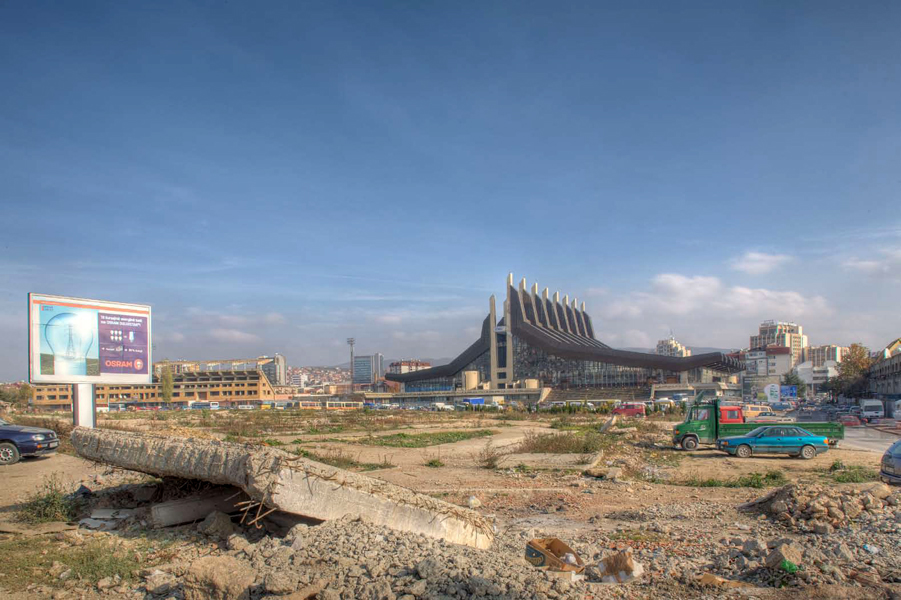
By Leart Mullaademi
An old building is often discussed as if its future comes down to two choices: preserve everything or clear the site. Neither is a serious starting point for design.
I would rather begin with an inventory. What still works? What can be repaired? Which spaces are generous enough for another use? Where have years of additions made the building harder to understand? These are architectural questions, and they deserve an answer before demolition becomes the default.
In Kosovo, a discussion about existing buildings is also a discussion about memory. A stair, a doorway or a room may carry associations that never appear in an official description. Those memories do not settle every design decision. They do tell us that a survey needs more than measurements.
The former Hivzi Sylejmani Library in Prishtina is a useful reference. In its OAZA programme, Manifesta described how limited archival documentation led to work with Foundation Shtatëmbëdhjetë to gather stories from former staff, readers, visitors and citizens. That is a practical method: when the written record is incomplete, ask the people who used the place.
Reuse should still be tested honestly. Structure, access, fire safety, comfort and running costs can make a proposal difficult. Keeping a façade while destroying everything meaningful behind it is not much of an achievement. Equally, keeping every partition can prevent a building from finding a viable next use.
The job is to decide what matters and explain the decision.
For ONUP, I would like to see project submissions include a simple account of what was retained, what was removed and why. A before-and-after photograph is useful. A drawing that identifies those decisions is better. A short conversation with a former user can add something neither image captures.
We do not need every existing building to become a museum. We need to stop treating its history as an obstacle that disappears when the site is cleared.
The first design move may be a question rather than a sketch.
Reference: Manifesta’s OAZA programme and its work on the library’s collective memory. Opinion and proposals are the author’s editorial position.